The Kharos saga · Book 4
Veysh
61–78 AR
An investigation in the highlands brings evidence, responsibility and civic power into conflict. The saga follows the family through the years toward Bale’s return to Vaelreach.
Read an excerpt ↓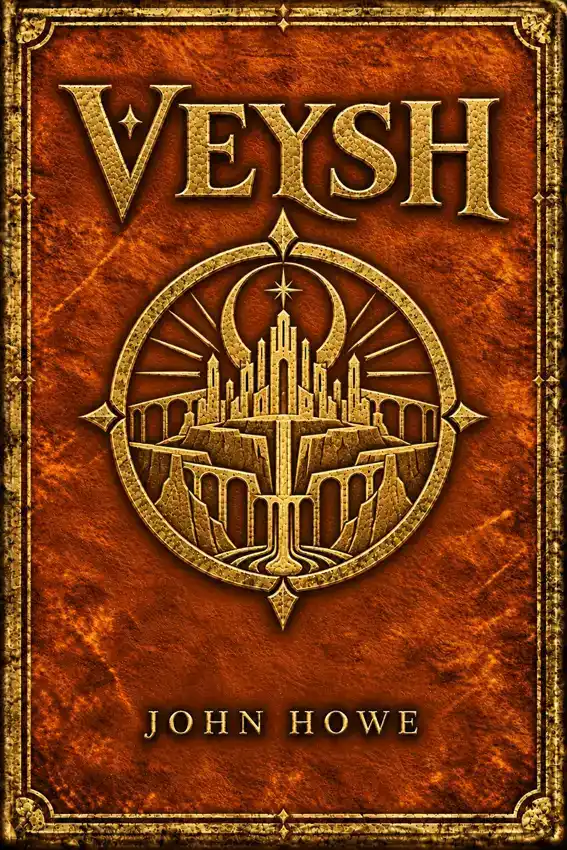
FROM THE MANUSCRIPT · READING EXCERPT
Enter the story
The boy next door had borrowed Vaeren’s little boat and returned it with one of the side boards split.
Vaeren held the boat between both hands at the kitchen table. He hadn’t cried. That made Seraya look twice at his face when he told her what had happened.
“He said it would float farther if we pushed it through the lower drain,” Vaeren explained. “I said the stones were too close together.”
“Did you push it anyway?”
“He did. I held the string. It caught against the corner and I tried to pull it loose.”
Seraya turned the boat toward the window. The old repairs to its sail had survived years of handling, but the starboard plank had split along its grain. Water had darkened the wood beneath the fracture.
“You can mend it,” she said.
“Father says it may need a new side.”
“And what do you think?”
“I think Father likes making new things when he could mend the old ones.”
Bale, who was standing in the doorway with an armful of kindling, looked at his son.
“That’s a terrible accusation.”
“You made me another mast.”
“After you broke the first one.”
“It was crooked before it broke.”
Bale placed the wood near the hearth. He wore his usual long, practical skirt, the hem damp from the yard, and had ducked beneath the beam as he came inside. The old injury across his side had become less visible over the past two years. After an awkward lift he still favored that side. Today he moved without the protective hesitation he had brought off Doveth’s ship.
“We could ask the boatwright to show us how to replace the plank,” he said.
“You could ask,” Vaeren replied. “You might learn something.”
Bale met Seraya’s eyes, and she had to turn away before she laughed.
It was the kind of morning they had wanted when they chose Mareld. Outside the window, wagons passed on the freight road; farther down the hill the harbor bells marked the changing watch. Their rented house needed another shutter repaired before winter. Seraya had a report to finish for Jelra, and Bale had promised the cooper’s yard he would examine a broad hauling frame before its next load arrived. They knew their neighbors well enough to complain about one another without being afraid.
Seraya had once measured safety in the distance between her family and the men pursuing them. Now she measured it in smaller things: what the baker charged for bread, whether the cistern ran clear, and which children would knock at the gate when Vaeren had finished his lessons.
The baker had raised his prices after two weeks of rain. Seraya knew why, because she’d watched the boats wait below the harbor until the channel cleared. She still disliked telling Vaeren that they would buy one loaf rather than two. He had stopped complaining about that sort of thing. He’d begun asking instead whether the boats had come through.
Bale came to the table with the kindling and found her looking at their expense book. “Bad news?”
“Ordinary news. Feed’s dearer. The repair on the lower road hasn’t been paid for. Someone will want a contribution.” She closed the book. “I thought I’d be glad when our problems became ordinary. Now I keep looking for the next extraordinary one.”
He drew out a chair but didn’t sit until she pushed the smaller ledger out of the way. “I went to the boatwright. He’ll take Vaeren for an hour when the weather clears, provided one of us stays.”
“He asked you to remain?”
“I asked him. Vaeren’s good with tools, but he forgets what his hands are doing when somebody starts explaining boats.”
Seraya watched their son run one finger along the broken hull. He could remember the way into the market, the width of the safe freight street, the sound of the watch bell. He’d learned those things because he’d been allowed to stay somewhere long enough for them to matter.
◆
End of excerpt. This site presents a selection from the manuscript.